Showing posts with label Harold Cheeseman. Show all posts

Friday, 30 August 2024

Accommodation crisis

About a century ago, the schools in Penang were bursting at the seams as the Straits Settlements government grappled with a severe accommodation crisis. Something had to be done, and the answer came in August 1922. 

At the end of the inter-school sports meet on the Esplanade, David Alexander Murray Brown, otherwise known as DAM Brown or Dammy Brown, who was a prominent businessman and member of the Legislative Council, hinted that Penang could see at least one new school opening in the next few years. It would be a much-needed development. The town’s main schools—Penang Free School, St Xavier’s Institution and Anglo-Chinese School (now Methodist Boys’ School)—were turning away hundreds of boys each year due to a lack of space. Things got so cramped that the Free School even resorted to holding extra classes at the Chinese Town Hall.

The government stepped in with a temporary solution by leasing a grand building at 11 Northam Road, which had formerly been the Hotel Norman and much later, a Chinese girls' school. This space was converted into the Northam Road Government English School—an extension of Penang Free School, so it seemed—and intended to ease the overcrowding until new school buildings could be constructed. The new school could accommodate up to 600 children in its primary classes. HR Cheeseman, formerly a senior master in the Free School, became the first headmaster. He was well known for his strict but fair discipline, passion for sports and tireless dedication.

The building had a large compound with enough space for drills and even a football match. It was leased from Thye Chee Tean and Tye Shook Yuen, executors of the estate of Tye Kee Yoon, a former Chinese Consul in Penang. In his will, Tye Kee Yoon had left funds for charitable causes, and his estate pledged $50 monthly to the school’s funds as long as the lease was in place.

Tye Kee Yoon's estate wasn’t the only benefactor of the Northam Road school. Four years after its opening, Cheeseman, by then promoted to Inspector of Schools in Penang, wrote a letter to the Penang Gazette and Straits Chronicle (22 June 1926), to publicly thank Lim Gim Kang and Lim Gim Hoe of Gim Lee Estate, Kulim, who had "offered to give annually, in memory of their father, the late Mr Lim Mah Yeow, the sum of three hundred dollars to be devoted to the purchase of prizes and library books for the Government English School, Northam Road, Penang. This generous gift is much appreciated and has been gratefully accepted.”

For a time, opening the Northam Road Government English School helped ease the schooling congestion in Penang. But barely four years later, the government was forced to open more temporary schools to meet the demand. One of these was the Farquhar Street Government English School, which functioned for four years. 

There’s scant information about this temporary school except that the double-storey building was located at the junction of Farquhar Street and Love Lane. When it opened in 1926, it relieved the Northam Road Government English School of some 210 pupils. Initially, there were six classes, consisting of one Standard III, two Standard IV and three Standard V. Three of the classes were upstairs and three downstairs, with 35 boys allotted to each class. The school's most famous pupil was Lim Chong Eu, the future second Chief Minister of Penang. After finishing his Standard IV here, the young Chong Eu went to Hutchings School before eventually joining Penang Free School. When the Francis Light School opened on Perak Road in January 1930, the boys from the Farquhar Street Government English School were absorbed there en masse. The temporary school was then closed, and the building returned to the Roman Catholic Mission.

Meanwhile, the government pressed ahead with its long-term plans. The new school facilities in Green Lane, known today as Penang Free School, its construction long delayed owing to financial depression, finally materialised. The older boys from the Free School were transferred there in 1928, leaving the Farquhar Street premises—now renamed as Hutchings' School by The Old Frees' Association—for the younger pupils. Two additional schools were also constructed for elementary education: Francis Light School in 1930 as mentioned above and Westlands School in 1935. These new schools provided ample playgrounds and gave the boys plenty of space to run, play and enjoy their breaks.

All these efforts, back in the 1920s and 1930s, helped ease the overcrowding crisis that plagued Penang’s schools for years.

© Quah Seng Sun 2024

--------------------------------------------

This story is based on a newspaper clipping from The Straits Echo (Mail Edition), dated 22 August 1922, plus other inputs, including:

- Pinang Gazette and Straits Chronicle, 1 July 1921
- The Straits Echo (Mail Edition), 19 January 1926 
- The Straits Echo (Mail Edition), 21 August 1929 
- Sunday Tribune, 19 December 1937

Tuesday, 1 May 2018

Westlands’ Northam Road connection

LET ME relate to you the story of the Northam Road Government English School and how Westlands School could trace its roots to this government English school and inter alia, to the much respected Harold Cheeseman after whom the Cheeseman Hall at Westlands was named.

For a long while, I had just a passing interest in this government school. The only information I had previously was that it was located at 11 Northam Road, Penang. However, right after my friends and I began this blog on Westlands School, I realised the historical connection between the two institutions. I needed to find out where exactly was this Number 11 Northam Road, especially since it didn't show at all in the present maps of George Town.

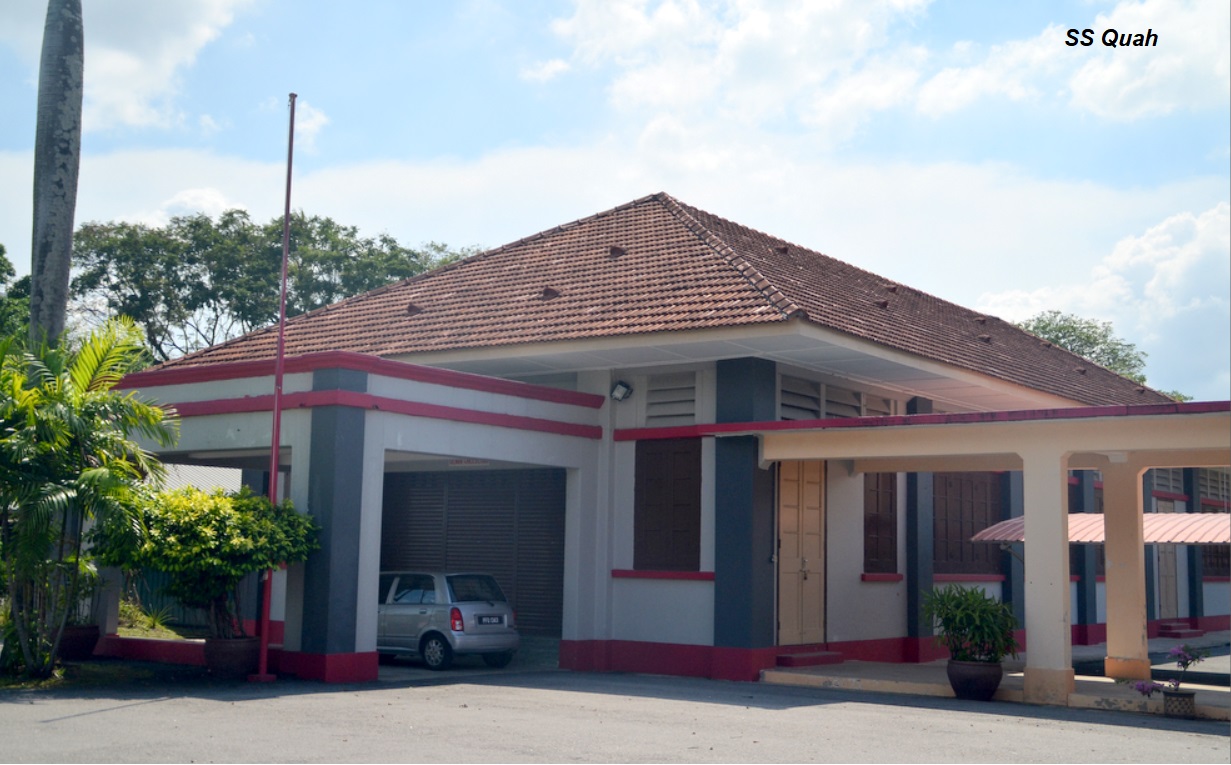
The Northam Road Government English School (NRGES, left), with 400 students, was run by Harold Cheeseman for a few months in 1922 before he became Penang's Inspector of Schools. It operated for slightly over a decade after that. In 1933-34, the students were moved to Hutchings School before ending up in the new Westlands School in 1935. The premises of the NRGES were occupied by the Shih Chung Branch School from 1938. It is now in a dilapidated state (right) awaiting its next renewal.


I started searching elsewhere and Hey Presto! guess what, here it is. Number 11 Northam Road is now where the Shih Chung Branch School once operated from. Realising that it was once the Shih Chung Branch School stirred in me an old memory. I remember that 10 years ago, I had written something about this school in my personal blog. I had even mentioned in passing that it was also used as a government English school. But it escaped me that it was THE Northam Road Government English School. It is only lately that I've managed to tie almost all the loose ends together.

What more do we know about this building? Its history is known but it is incomplete. Originally belonging to the two Cheah brothers, Tek Soon and Tek Thye, the building was bought up by Tye Kee Yoon. Between 1908 and 1920, the building was used for various purposes. At the start, it was used as the Chinese Consulate but later, the Tye family leased it out for use as the Bellevue Boarding House. In 1910, RN Brunel-Norman took over the boarding house and called it as Raffles-by-the-Sea, or simply Raffles for short. However, due to constant confusion arising from the hotel bearing a name similar to that of the Raffles Hotel in Singapore, Brunel-Norman was forced to re-name his establishment as Hotel Norman in Sept 1912. He was to continue the hotel business for another two years. By Dec 1914, having made up his mind to leave Penang, he put up his hotel under the auctioneer's hammer. Maybe Brunel-Norman was not able to find a buyer because within a few months, that is, in 1915, the building had entered a new phase as the P'i Joo Girls School until 1920.

According to Dr Kim Phaik Lah, former Associate Professor at the School of Educational Studies, Universiti Sains Malaysia, Penang: “P’i Joo Girls School was a pioneer Chinese girls school in Penang. Established in 1915, its three principals were educators from China. At its height, there were more than 250 students. The school, however, closed down in 1920. The same year, Fuchien Girls School (now Bin Hua or Penang Chinese Girls High School), was founded. Mdm Chee Yuet Wah, the first principal of Fuchien Girls, was a student of P'i Joo Girls.”

This report below comes from the Penang Heritage Trust website:
The once-stately mansion of Goh Chan Lau, which means “Five-Storey Villa”, was built by the brothers Cheah Tek Soon (Xie Deshun) and Cheah Tek Thye (Xie Detai). Cheah Tek Soon’s daughter Cheah Liew Bee (Xie Liumei) was married to Goh Say Eng (Wu Shirong), a fervent supporter of Sun Yat Sen. It was said that Goh Say Eng had persuaded the Cheah family to sell off the villa to financially fuel the revolutionary activities of Sun Yat Sen.
In 1908, the villa passed into the hands of Tye Kee Yoon (Dai Xiyun), the Chinese Consul in Penang, who turned it into the Chinese Consulate. After the 1911 Revolution, his son Tye Phey Yuen (Dai Shuyuan) became the first Consul of Republican of China in Penang.
In 1915, the brothers Leong Eng Kean (Liang Enquan) and Leong Yin Kean (Liang Yingquan) rented the upper floor of the bungalow as the premises for the P’i Joo Girls’ School, which was forced to shut down when the Education Bill of 1920 was put into effect.
The Shih Chung Branch School, founded in 1938, occupied these premises until 1994.
I shall now attempt to fill in this blank with the unknown history of Goh Chan Lau from 1920 to 1938 but first, I shall reproduce this excerpt from a news report in The Straits Times of 19 Aug 1922:
PENANG SCHOOLS: Solving the Accommodation Difficulty
The Government has now taken over the fine-looking and commodious building, No 11 Northam Road, that was formerly the Hotel Norman and more recently, a Chinese Girls' School, on a three years' lease, in order to provide accommodation for children for whom no room can be found in the other schools at the present time. This arrangement, we are informed, is only a temporary one pending erection of permanent Government buildings.
This new establishment which is styled "Government English School" has accommodation for 600 children if necessary, but if that number is admitted arrangements will have to be made for extra teachers, etc. At present the number in attendance totals about 400 and there is, we hear, accommodation for 30 or 40 more children. The boys are all in the primary classes and under the charge of Mr HR Cheeseman, formerly of the Free School, who is as everyone knows a fine disciplinarian, and keen sportsman and indefatigable volunteer. The site and building are admirably suited to the purpose, indeed a better location in Town could not have been selected. The house stands in a large compound, one side of which is sufficiently spacious for drilling and even a football match.
The Towkays from whom the place is leased to Government are Messrs Thye Chee Tean and Tye Shook Yuen, the executors of the estate of the late Mr Tye Kee Yoon, Chinese Consul in Penang. In his will the late Mr Tye Kee Yoon bequeathed certain sums for charitable and other purposes. The executors of his estate have consequently been able kindly to promise to subscribe $50 a month towards the school funds as long as the Government holds a lease from them, as a token of respect for the memory of the late Chinese Consul and in accordance with his wishes.
The Government, we learn, intends to erect new school buildings in Green Lane, and when these have been completed, in about a couple of years' time, the older boys in the Free School will be transferred to them, leaving the present buildings (i.e. the Free School) in Farquhar Street for the elementary classes. It is also under contemplation to erect a new school in Perak Road about a year hence which will also be devoted to elementary education. There will be sufficient playgrounds at these schools for the boys' recreation.
So you can see here the connection of Harold Cheeseman with the Northam Road Government English School. However, Cheeseman stayed with the school for just a mere five months as he was soon transferred to become the Settlement's Inspector of Schools. The Government English School used the 11 Northam Road premises right until the end of 1933. On 11 Dec 1933, the school organised its last annual prize giving ceremony, which was reported thus in the Malaya Tribune of 14 Dec 1933:
The Government English School, Northam Road, held its annual prize giving on Monday when a very creditable entertainment was staged by the pupils. 
Mrs O'Sullivan gave away the prizes, and was thanked by Mr Hamid Khan, the headmaster, who said that during the year work had commenced on a new school to be built at Westlands to take the place of the present school and it would be ready for occupation next year.
Besides recitations and action songs, Mr Tan Thean Seng's squad gave a fine exhibition of ju-jitsu and boxing. Five second-year Malay boys appeared in a short play entitled "Ja'afar and The Thief" and acquitted themselves with distinction, their enunciation being exceptionally good.
Despite Hamid Khan's confidence about the Westlands School being ready for occupation in 1934, we now know that the intake of new boys into Westlands School only began in 1935. During the one-year interim period between the Northam Road Government School closing at the end of 1933 and the Westlands School opening in 1935, the boys were transferred to Hutchings School to continue their education. This short news item in the Singapore Free Press And Mercantile Advertiser of 10 Mar 1934 related what happened:
NEW ENGLISH SCHOOL: $50,000 Scheme Launched in Penang
The Government are building a new Elementary English School at Westland (sic), Burmah Road. The approximate cost is to be $50,000. Work has been started and is expected to be finished by the end of December next. The school will have accommodation for 600 pupils. A cricket pitch, tennis courts, badminton courts, etc, will be laid on the site, which is seven and a half acres.
The new school will replace the Government English School at Northam Road, which is now empty, as the boys are transferred to Hutchings school.
After the Northam Road Government English School moved out, it was not known what exactly had become of the building in the next few years except that the executors of the estate of Tye Kee Yoon would have retaken control of the premises.

In Oct 1937, it was reported by the Malaya Tribune that the building was under-going demolition. Actually, the five-storey building was not being demolished but just under-going renovation work in preparation for its next phase as the premises of the new Shih Chung Branch School which was established in 1938. The Shih Chung Branch School has an equally interesting history but researching this must be someone else's project, not mine. I won't cover it here.

Below is the earliest image of the Westlands School that I could find, taken in February 1935:


© Quah Seng Sun 2018

Tuesday, 17 April 2018

Harold Cheeseman


IN MY opinion, there was more to it than simply naming the new hall at Westlands School after the retired Director of Education, Harold Ambrose Robinson Cheeseman (b.1890, d.1961). The connection between Cheeseman and Westlands School went far deeper than just the hall, as I will reveal in a later blog story.

In case anybody suggests that I have a fixation about Cheeseman in this Westlands School blog, perhaps I should explain that the influence of the former Malayan Director of Education loomed large in the annals of Education of this country. He wasn't just a Director of Education, or in his younger days, arriving at Penang Free School as an assistant master on an initial three-year contract, an Inspector of Schools in Penang or Chief Inspector of Schools who travelled all over British Malaya and the Straits Settlements.

There were two phases in Cheeseman's distinguished career in the Far East. The second phase was when he was an administrator in the Malayan civil service, beginning with his appointment as the Inspector of Schools in Penang. The first phase started as he arrived in Penang, fresh-faced and carefree as an 18-year-old lad, looking for adventure of sorts, no doubt.

Unlike the other European masters of his time at the Free School, he didn’t possess any academic degree and wasn’t armed with any professional qualification. But we’ve got to admire the man for his grit and determination because once his value was recognised by the British powers-that-be, he rose to the highest position in Education ever attained by a civilian or public servant.

While at Penang Free School from 1907, he was described by the former headmaster, Ralph Pinhorn, as a man with indefatigable energy. Very much interested in the outdoors and extra-curricular activities, he initiated the Scout movement in Penang Free School and encouraged St Xavier'’s Institution and Anglo-Chinese School (now the Methodist Boys' School) to start theirs too.

Cheeseman was a person most admired among the Scouters and even FC Sands, the Scout Commissioner for Malaya, looked at him with respect. Sands wrote once: “There is a man in Penang of whom I am terrified, and the words of wisdom which I utter will probably not impress him at all. He will probably 'turn and rend' me. However, I have the advantage (a mean one, doubtless) of being able to get the last word, and that gives me courage.”

He also started the Penang Free School Magazine in 1909, a publication which set the trend for other schools in the Straits Settlements and British Malaya to follow. The school magazines were produced periodically and wholly owned by the boys. By the way, Cheeseman's popular nickname among the schoolboys was, you guessed it right, “Orang Keju.” It was all in good fun but nobody else would have dared call him that except the boys he had taught.

During the first phase from 1907 till 1922, Cheeseman was:
  • Employed initially as Assistant Master at Penang Free School on a three-year contract (1907);
  • Appointed to command both the Penang Free School Cadets (from 1907) and Scouts (from 1915);
  • Elected Secretary and treasurer of the Penang Football League (1912);
  • Elected Vice-president of the Penang Literary Society (1915);
  • Made Second Lieutenant of the Chinese Company (D Company) of the Penang Volunteer Corps (1916);
  • Elected Vice-president of the Penang Schoolmasters' Athletics Association (1916); 
  • Appointed Headmaster of Northam Road Government English School (Aug 1922);
  • Considered the catalyst that set up The Old Frees' Association (Oct 1922).
Cheeseman was assimilated into the Straits Settlements civil service with the taking over of Penang Free School by the Government in Jan 1920. Subsequently, when he was transferred out from Penang Free School in Aug 1922, he was appointed as the first headmaster of the new Northam Road Government English School. He was at the helm of this new school for barely a few months before his abilities then taking him into the administrative side of education in which he remained for the next 41 years.

“In 1923, he became Inspector of Schools in Penang, and seven years later was the first Superintendent of Education in Johore, a new post which had been created in an enlightened State which desired to be as rich in education as it was in rubber,” according to a story in The Straits Times of 10th Dec 1948 to report his retirement. [Note: It was not seven years, as mistakenly reported by the newspaper, but five years between his appointments as Inspector of Schools Penang and Superintendent of Education Johore.]

From 1923 till the onset of the Japanese Occupation, Cheeseman was:
  • Appointed Inspector of Schools in Penang (Jan 1923);
  • Appointed Commissioner of the Boy Scouts in the Settlement of Penang (June 1923);
  • Made Fellow of the Royal Colonial Institute (Nov 1923);
  • Appointed a member of the Board of Examiners in Languages (for Malay) for Penang (Jun 1923);
  • Elected as Committee Member of the Penang Library (Mar 1924);
  • Appointed Unofficial Trustee of Penang Free School (Mar 1924);
  • Appointed Supervisor of Education, Johore (Mar 1928);
  • Appointed Inspector of Schools, Singapore and Labuan (Apr 1934);
  • Appointed Chief Inspector of Schools, Straits Settlements and Federated Malay States (Jun 1937);
  • Appointed Deputy Director of Education, Malaya (Sep 1938);
  • Elected President of the Singapore Rotary Club (July 1941).
At the time of the Japanese invasion of Malaya in Dec 1941, Cheeseman was already the Deputy Director of Education. When he was interned at the Changi Gaol and Sime Road Camp in Singapore, he organised lectures and camp schools for the adult interns and their children, numbering around 3,000 in all, at what was loosely referred to as the Changi University until the purge of the Double Tenth incident of 10th Oct 1943 put a stop to them. [Read a little about Cheeseman’s experience during his internment here.]

After the surrender of Japan in September 1945, Cheeseman resumed his work in the Education Department and soon afterwards, he was elevated to the post of Director of Education of the Malayan Union and later, the Federation of Malaya. He was made a Companion of the Order of St Michael and St George (CMG) in the King’s New Year Honours List of 1947. He retired in Dec 1948 and settled down in Kent, England. Cheeseman died in the town of Ramsgate in Nov 1961, aged 71.

© Quah Seng Sun 2018

Friday, 6 April 2018

Cheeseman and his hall


THIS IS the Cheeseman Hall today, both inside and outside, although I don't remember it being so garishly painted back in the good old school days. I understand that it is still being used for events. However, it was very gratifying to see that despite the Education Department having taken over the former Westlands Primary School and turned it into a Centre for Sports Excellence, the original name for the Cheeseman Hall was retained. The authorities could have quietly renamed it a long time ago and nobody would have been the wiser. There would have been no public hue and cry because hardly anybody today would know who the bloody ’ell this Cheeseman was. In fact, nobody would have noticed it except for us few diehard former Westlands Primary School students on a nostalgic visit to our former primary school. But the fact that they did not change the Hall's name meant that there was still a strong connection with the past.

When I was writing the story on the roads around Westlands, I had inserted an undated map of the area which I discovered in an old book. I surmised the map could have been possibly drawn in 1935 or 1936. Recently, I got lucky again. Just about a fortnight back, I unearthed from the archives of the National Library Board of Singapore an equally old map of Penang. Well, almost as old. This map was also undated but the National Library estimated that it was likely prepared by the Japanese before the Second World War that began in December 1941. Given that the Anglo-Chinese School building (now the Pykett Methodist Primary School building) was opened at the end of 1937 - and shown here as the encircled 21 in red - that would narrow down the date of the map to be between 1938 and 1941. A four-year-window. Like the 1935 or 1936 map I mentioned earlier, the Cheeseman Hall building was still not included in this later map. (Note: In the map from the National Library archive, the encircled red numbers were added by the Japanese – there were 55 numbered buildings in all - to identify the main offices, clubs, school, police stations, hospitals, etc, with each landmark given its Japanese equivalent translation.)

To be sure, the Cheeseman Hall building did not exist when the main school block was constructed in 1934. According to a newspaper report, whenever it was so required, a “hall 80 feet by 20 feet will be available for assembly, lectures, exhibitions or speech days by folding the wooden partitions between two classrooms.” (Malaya Tribune, 14 Mar 1934)

So when was the Cheeseman Hall built? Before the War or after the War? I’m sorry to say this but records are just not there anymore. But my nagging speculation is that the building could have been erected around or after 1948. You see, Harold Ambrose Robinson Cheeseman, after whom the hall was named, was the Federation of Malaya Director of Education  He retired at the end of 1948 after a long and illustrious career of 41 years in the service of Education. He had spent his entire career in the Malayan peninsula, having started fresh off the boat in 1907 as an assistant master in Penang Free School. After he retired as Director of Education, tributes to honour him went into full swing, such as the establishment of a Cheeseman Fund in October 1949 to commemorate his work in education (Malaya Tribune, 13 Oct 1949) and the naming of a road opposite Penang Free School as Cheeseman Road instead of Greenlands Avenue in July 1950 (Singapore Standard, 28 July 1950). Therefore, I wouldn't be too surprised if the Westlands School had also decided to name their new hall after Cheeseman too. The earliest mention I could find of a Cheeseman Hall in the news was in the 21 May 1951 edition of the Singapore Standard. [An update: I have discovered an earlier mention of a Cheeseman Hall at Westlands School. The Singapore Standard of 6 December 1950 mentioned the "Westlands School Speech Day and Exhibition (Chesseman Hall) 5.30pm.]

© Quah Seng Sun 2018

Sunday, 18 March 2018

Westlands School today

WESTLANDS SCHOOL does not exist anymore. Due to dwindling student population, the Education Department had converted the school into the Westlands Centre for Sports Excellence in 1992. Today, the place is also the home to the Penang Schools Sports Council (MSSPP).

When we visited the Westlands grounds on the afternoon of 12 Mar 2018, we found the place empty and serene. Obviously, no boys were running along the corridors or making the usual noise in the classrooms. This perhaps contributed to the nostalgia of visiting this old haunt.

The main building is almost the same as 50 to 60 years ago except for trees now lining the road from the entrance to the Cheeseman Hall.

The school bell remains hung on the first floor of the building above the porch. I wonder what it is used for nowadays....

This is the back of the school. In the old days, there was a one-storey structure in place of the present-day four-storey building. The canteen was located here, together with the toilets and the staff quarters.

The playing field is almost the same except for the presence of a permanent row of white canopies that are hidden by the trees to the left of the picture. In the old days, makeshift tents for the school Houses would be erected at the far end of the field during the annual Sports Day.

This is the Cheeseman Hall, named after Harold Cheeseman who became the Director of Education in Malaya immediately after the end of the Second World War.

The inside of the Cheeseman Hall today. The old school crest is still there above the stage although the position of the W and S have been switched around, and the motto had been changed to “Berusaha” to reflect the national language.

Interestingly, the background of the board that says “Dewan Cheeseman” is in red. If I remember correctly, red is the official colour of Cheeseman House at Penang Free School where Cheeseman started his illustrious teaching career in the Straits Settlements in 1907.

-- Quah Seng Sun --